
Introduction
A hot tub can make an outdoor space feel more welcoming and comfortable. It creates a place where you can relax after a busy day, spend time with family, or enjoy a quiet evening outside. However, choosing the right hot tub is not as simple as picking an attractive design. You also need to consider space, installation requirements, running costs, water quality, and regular maintenance.
Many first-time buyers focus on the number of seats, water jets, and additional features. These things matter, but they are only part of the decision. A hot tub must also fit your property, suit your daily routine, and remain affordable to operate over time.
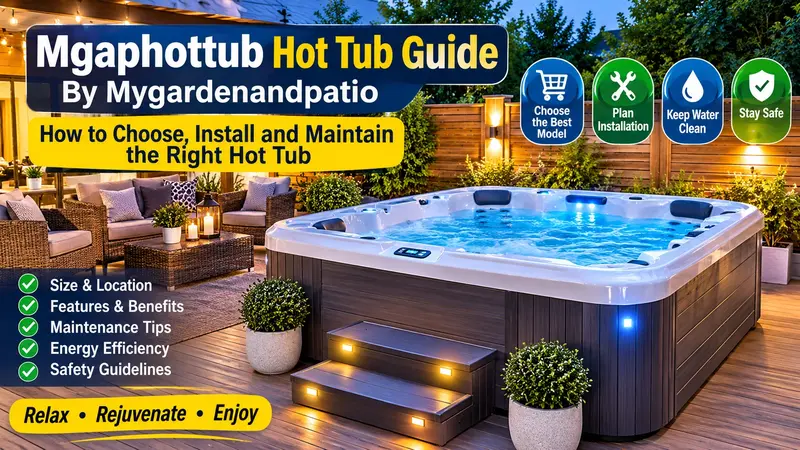
This Mgaphottub Hot Tub Guide By Mygardenandpatio covers the important details that homeowners should understand before purchasing a hot tub. It explains different types, useful features, installation planning, water care, energy efficiency, and safety practices.
Whether you are considering a compact model for a small patio or a larger option for a family garden, understanding these points can help you make a more practical decision.
1. Understanding Different Types of Hot Tubs
Before comparing individual models, it helps to understand the main types of hot tubs available. Each option has different installation needs, features, and costs.
Portable Hot Tubs
Portable hot tubs are among the most common choices for residential properties. They usually have a rigid shell, built-in heating equipment, filtration, and water jets.
Most models are designed for outdoor installation, although some may be suitable for other locations when the space and ventilation requirements are met.
Their main advantage is convenience. Once the installation area and electrical supply are prepared, the unit can provide a permanent place for relaxation.
Inflatable Hot Tubs
Inflatable hot tubs are generally designed for people who want a more affordable and flexible option.
They are usually lighter and easier to store than rigid models. However, they may offer fewer features, less powerful insulation, and different durability expectations.
An inflatable model can work well for occasional use, but buyers should check the manufacturer’s guidance about the supporting surface, operating temperature, and storage.
Built-In Hot Tubs
Built-in hot tubs are designed to become part of a larger outdoor or indoor space.
They may be installed into a deck, patio, or custom-designed area. These projects often require more planning because plumbing, electrical connections, access panels, and structural support must be considered.
Built-in options can create an attractive outdoor feature, but installation and future repairs may be more complicated.
Swim Spas
Swim spas are larger units that combine a swimming-style water current with a heated soaking area in some designs.
They require more space and a suitable supporting structure. Their operating costs may also be higher because of their size and equipment.
The right type depends on your budget, available space, and how frequently you plan to use it.
2. How to Choose the Right Hot Tub Size
Size is one of the first things to consider when buying a hot tub. A model should provide enough room for its regular users without making the surrounding outdoor area uncomfortable.
Start by deciding how many people will normally use it. A couple may prefer a compact two-person model, while a family might need additional seating.
However, advertised seating capacity does not always tell you how comfortable a hot tub will feel. Seat shape, legroom, water depth, and the arrangement of the seats can all affect the experience.
Before making a purchase, consider these points:
- Regular users: Think about the number of people who will use the hot tub most often.
- Available space: Measure the complete installation area, not just the tub itself.
- Seat arrangement: Check whether the seats provide enough personal space.
- Access: Leave room for getting in and out safely.
- Maintenance: Make sure service panels and equipment remain accessible.
A larger hot tub may seem more attractive, but it also holds more water and may require more energy and maintenance.
The best size is the one that comfortably meets your normal needs without creating unnecessary expenses.
3. Finding the Best Location for Installation
Choosing the right location can make a major difference to your hot tub experience. A good position improves convenience, privacy, safety, and maintenance access.
Check the Supporting Surface.
A filled hot tub can be extremely heavy. The total load includes the empty unit, water, equipment, and people using it.
For example, 1,000 liters of water alone weighs approximately 1,000 kilograms. This does not include the weight of the hot tub or its occupants.
A suitable supporting surface must be level, stable, and strong enough for the expected load. Reinforced concrete is commonly used, while properly designed decking may also be suitable.
Never assume that an existing wooden deck or patio can support a filled hot tub without checking its structural capacity.
Consider Privacy
Privacy can make outdoor soaking more enjoyable. You may want to position the hot tub near a fence, privacy screen, wall, or suitable landscaping.
However, avoid placing it somewhere that becomes difficult to access or maintain.
Think About Weather Conditions
Wind, rain, direct sunlight, and cold temperatures can influence comfort and operating costs.
A sheltered location may help reduce exposure to strong winds. At the same time, there should be enough ventilation and drainage around the installation area.
Plan for Water and Electricity
The location should allow convenient access for filling and draining. Electrical connections must be planned according to the manufacturer’s specifications and local electrical regulations.
A qualified electrician should assess the installation requirements before the hot tub is connected.
4. Important Features to Look for Before Buying
Modern hot tubs offer many features. Some improve comfort and convenience, while others may increase the price without adding much value to your daily experience.
Understanding the main features can help you compare models more effectively.
Water Jets and Massage Settings
Jets create water movement and can provide a more comfortable soaking experience.
However, a higher jet count does not automatically mean better performance. Placement, adjustability, water pressure, and pump design are also important.
If possible, compare how the jets are positioned around the seating areas.
Comfortable Seating
The seating arrangement should match the people who will use the hot tub.
Some models have upright seats, while others include reclined loungers. A combination may be useful for households with different preferences.
Check the seat depth and available legroom before choosing.
Heating System
The heater controls how the water reaches and maintains the selected temperature.
Compare heating performance, equipment quality, and manufacturer specifications. A suitable heating system should work efficiently with the tub’s insulation and circulation system.
Filtration System
Filtration helps remove particles and other unwanted material from the water.
A reliable system is important for maintaining water quality. Check how easy the filter is to remove, clean, and replace.
Digital Controls and Lighting
Digital control panels can make it easier to adjust temperature, filtration schedules, and other settings.
Underwater lighting can also improve the atmosphere during evening use.
These features are useful additions, but they should not take priority over construction quality, insulation, and reliable equipment.
5. Preparing for Professional Hot Tub Installation
Proper installation is essential for reliable operation. Even a high-quality hot tub can develop problems if the supporting surface, electrical connections, or access arrangements are unsuitable.
Prepare the Installation Area
Before delivery, confirm that the selected surface is complete and ready.
Check the dimensions of the hot tub against the available space. Also measure gates, pathways, steps, and other access points.
Delivery companies may need special equipment to move larger units into position.
Arrange Electrical Work
Hot tubs combine water and electrical equipment, so electrical safety must be taken seriously.
The electrical supply should meet the manufacturer’s requirements and applicable local regulations. Depending on the installation, protective devices and other electrical safety measures may be required.
Always use a qualified electrician. Do not attempt improvised connections or use ordinary extension cords as a substitute for the required supply.
Check Equipment Access
Pumps, heaters, filters, and control systems may need attention during the life of the hot tub.
Keep enough clearance around the equipment compartment so that technicians can inspect and repair components.
Review the Installation Manual
Every model has specific requirements. Follow the manufacturer’s instructions for positioning, filling, electrical connection, startup, and initial water treatment.
A little preparation can prevent installation delays and avoidable repair expenses.
6. Hot Tub Water Care: Keeping the Water Clean
Clean water is one of the most important parts of owning a hot tub. Warm water requires regular attention because unsuitable water conditions can encourage the growth of microorganisms.
A filtration system helps remove particles, but it does not replace proper water treatment.
Test Water Regularly
Use suitable testing products to monitor the water according to the manufacturer’s instructions.
Depending on the treatment system, you may need to check:
- Sanitizer levels.
- pH balance.
- Total alkalinity.
- Other water conditions recommended for your model.
Correct chemical levels help maintain water quality and protect equipment.
Use Suitable Sanitizers
Hot tubs generally require an appropriate sanitizer to control unwanted microorganisms.
Different systems use different products. Chlorine and bromine are common options, but the correct choice depends on the equipment and manufacturer’s recommendations.
Never mix chemicals together or add products without understanding their instructions.
Clean the Filters
Filters collect particles from the water during circulation.
Remove and clean them according to the recommended schedule. A heavily blocked filter can reduce water flow and make the circulation system work harder.
Replace filters when cleaning no longer restores their performance.
Shower Before Using the Hot Tub
Showering before entering can reduce the amount of body oils, sweat, cosmetics, and other contaminants introduced into the water.
This simple habit can make water maintenance easier.
7. Regular Cleaning and Maintenance Routine
A hot tub needs consistent care. A simple maintenance routine helps keep the water comfortable and allows you to notice problems before they become more serious.
After Each Use
Remove visible leaves and debris when necessary. Check that the water remains clean and that the cover is properly positioned after use.
Weekly Maintenance
Depending on usage and the manufacturer’s instructions:
- Test and adjust water chemistry.
- Inspect sanitizer levels.
- Check the filter and clean it when required.
- Wipe the waterline.
- Look for visible leaks or unusual changes.
Monthly Maintenance
Inspect the cover, cabinet, and accessible equipment areas.
Look for cracks, damage, unusual noises, and signs of water leakage. Check that the circulation system is operating normally.
Periodic Draining and Cleaning
Hot tub water eventually needs to be replaced.
The correct draining schedule depends on water quality, usage, treatment products, and manufacturer guidance.
When draining, use an appropriate location and follow local rules for disposing of treated water. Clean the shell with products approved for the hot tub surface before refilling.
A regular routine helps protect the equipment and keeps the overall experience more enjoyable.
8. Understanding Hot Tub Energy Efficiency and Running Costs
The purchase price is only one part of hot tub ownership. Electricity, water treatment, replacement filters, cleaning products, and repairs can all contribute to the long-term cost.
Energy efficiency deserves attention before buying.
Choose Good Insulation
Insulation helps reduce heat loss from the water and equipment compartment.
Compare the insulation design of different models rather than judging efficiency by appearance alone.
Use a Quality Cover
A properly fitted insulated cover helps retain heat when the hot tub is not being used.
It also reduces the amount of leaves, dust, and other debris entering the water.
Check the cover regularly for damage, moisture, and poor fitting.
Avoid Unnecessary Heat Loss
Leaving the cover open for long periods allows heat to escape.
Close it after use and follow the manufacturer’s temperature and operating recommendations.
Compare Realistic Operating Costs
Ask the seller or manufacturer for estimated energy consumption under stated conditions.
Remember that actual costs depend on several factors, including:
- Outdoor temperature.
- Frequency of use.
- Water temperature.
- Insulation quality.
- Cover condition.
- Electricity prices.
You can estimate electricity expenses by multiplying the unit’s energy consumption in kilowatt-hours by your electricity tariff.
This makes it easier to compare different models and understand the likely cost of ownership.
9. Essential Hot Tub Safety Guidelines
A relaxing environment should also be a safe one. Hot water, wet surfaces, and electrical equipment require responsible use.
Supervise Children
Children should never use a hot tub without appropriate adult supervision.
Hot water can create risks, particularly for young children. Follow the manufacturer’s age and temperature guidance.
Follow Temperature Recommendations
Do not set the water temperature above the recommended safe limits.
The U.S. Consumer Product Safety Commission and other safety authorities provide guidance on hot tub temperature risks. Follow relevant local recommendations and manufacturer instructions.
Avoid Alcohol
Alcohol can affect judgment and increase the risks associated with hot water exposure.
Avoid consuming alcohol before or during hot tub use.
Be Careful With Wet Surfaces
The area around the tub should have suitable slip-resistant flooring.
Keep towels and other items in a convenient place so users do not need to walk across slippery surfaces.
Protect Electrical Equipment
Electrical components should be installed and maintained according to applicable safety regulations.
Never bring ordinary electrical appliances close to the water unless they are specifically designed for that environment.
Secure the Cover
When the hot tub is not being used, secure its cover properly.
A suitable locking cover can help prevent unauthorized access, keep debris out, and reduce heat loss.
People with health concerns, pregnancy, or medical conditions that may be affected by hot water should seek appropriate professional medical advice before use.
10. Preparing Your Hot Tub for Winter
Cold weather creates additional challenges for hot tub owners. Water inside pipes and equipment can freeze and cause damage if the system is not protected.
Your winter preparation depends on whether you plan to continue using the hot tub or shut it down.
If You Plan to Use It During Winter
Follow the manufacturer’s cold-weather operating instructions.
Keep the system operating as recommended, maintain proper water levels, and check that the cover fits securely.
Pay attention to the equipment and any warning messages.
If You Plan to Close It for Winter
Follow the complete winterization procedure.
Draining the visible water may not remove water trapped inside internal pipes, pumps, and other components.
Some models require specific procedures or professional assistance to remove remaining water safely.
Never assume that simply switching off the power and draining the tub is enough.
Proper preparation can help prevent freezing damage and make restarting the system easier.
11. Creating a Comfortable Hot Tub Outdoor Space
A hot tub can become the main feature of an outdoor relaxation area. With thoughtful planning, you can create a comfortable setting without making the garden look crowded.
Add Suitable Outdoor Seating
A small seating area gives family members and guests a place to relax before or after using the tub.
Choose furniture designed for outdoor conditions and keep enough walking space around it.
Improve Privacy
Privacy screens, fences, and suitable plants can make the space feel more comfortable.
Choose materials that can handle moisture and outdoor weather.
Use Appropriate Lighting
Outdoor lighting can make evening use more convenient.
Consider suitable low-voltage outdoor lighting or professionally installed fixtures designed for the environment.
Keep electrical products away from wet areas unless they are specifically rated and installed for that purpose.
Keep Towels and Accessories Organized
A small storage unit or weather-resistant cabinet can provide a convenient place for towels and basic accessories.
Keep cleaning products and hot tub chemicals secured and stored according to their labels.
Maintain a Clean Surrounding Area
Leaves, dirt, and garden debris can easily enter the water.
Trim nearby vegetation and keep the surrounding surface clean. This can reduce cleaning work and help maintain a more attractive outdoor space.
12. Common Hot Tub Buying Mistakes to Avoid
First-time buyers sometimes make decisions based mainly on appearance or advertised features. These mistakes can lead to higher expenses and unnecessary frustration.
Choosing the wrong size: A tub that is too large may increase running costs, while a small model may not provide enough comfortable seating.
Ignoring structural support: A filled hot tub can place a substantial load on the supporting surface. Always confirm that the foundation is suitable.
Overlooking electrical requirements: Electrical installation is a major consideration, not something to arrange at the last minute.
Focusing only on jet numbers: The quality and placement of jets are more important than simply having the highest number.
Underestimating maintenance: Water testing, filter cleaning, and periodic draining are part of normal ownership.
Ignoring the warranty: Review what the warranty covers, including the shell, heater, pumps, and other components.
Forgetting delivery costs: Access restrictions, special lifting equipment, and installation services may increase the overall budget.
Buying unnecessary extras: Additional lighting, speakers, and decorative features may sound attractive, but they should not replace essential quality and reliability.
13. How to Choose a Hot Tub That Fits Your Budget
A sensible budget should include more than the advertised purchase price.
Start by comparing the complete cost of buying and installing the unit.
Consider the following expenses:
| Expense | What to Consider |
|---|---|
| Purchase price | Model, size, construction, and features |
| Foundation | Concrete base or suitable structural support |
| Electrical work | Professional installation and required protection |
| Delivery | Transport, access, and special equipment |
| Electricity | Heating and circulation costs |
| Water care | Sanitizers and testing products |
| Filters | Cleaning and replacement |
| Repairs | Possible equipment servicing |
| Accessories | Cover, steps, and storage |
Ask the seller for a detailed quotation before making a final decision.
It is also useful to compare warranties and the availability of replacement parts. A slightly more expensive model may offer better long-term value if it has reliable construction and accessible servicing.
14. A Practical Checklist Before Purchasing
Use this checklist to review the most important details before placing an order.
Measure the available outdoor or indoor space.
Choose a suitable seating capacity.
Confirm the supporting surface can handle the filled weight.
Check delivery access and installation requirements.
Compare insulation and heating performance.
Review the filtration system.
Understand water treatment requirements.
Arrange professional electrical installation.
Check equipment access for future servicing.
Compare warranties and replacement parts.
Estimate ongoing electricity and maintenance expenses.
Review safety features and cover requirements.
Read the manufacturer’s operating instructions.
Completing these checks before buying can help prevent unexpected problems and make the installation process more straightforward.
Frequently Asked Questions
1. What should I consider before buying a hot tub?
Consider the available space, seating capacity, supporting surface, electrical requirements, insulation, filtration, maintenance needs, and total ownership costs. These factors are more important than choosing a model based only on its appearance.
2. How many people should a hot tub accommodate?
Choose a size based on the number of people who will regularly use it. Also consider seat design and available legroom because advertised seating capacity does not always represent the actual comfort level.
3. How often should hot tub water be tested?
Water should be tested regularly according to the manufacturer’s instructions and the treatment system being used. Regular testing helps maintain suitable sanitizer levels and balanced water conditions.
4. How often should a hot tub filter be cleaned?
Filter cleaning frequency depends on usage, water quality, and the model. Follow the manufacturer’s recommended schedule and replace the filter when it becomes worn or cannot be cleaned effectively.
5. Are hot tubs expensive to operate?
Operating costs vary depending on insulation, outdoor temperature, electricity prices, water temperature, and usage. A well-insulated model with a properly fitted cover may help reduce unnecessary energy consumption.
6. Can I install a hot tub on a wooden deck?
A wooden deck may support a hot tub if it has been properly designed and structurally assessed for the total filled weight. Never assume an ordinary deck is strong enough without professional evaluation.
7. Can I use a hot tub during winter?
Yes, many hot tubs are designed for year-round operation. However, owners should follow the manufacturer’s cold-weather instructions and maintain the heating and circulation systems as recommended.
8. What is the most important hot tub maintenance task?
Maintaining clean and properly balanced water is one of the most important tasks. Regular testing, correct sanitizer use, and filter cleaning help protect both users and equipment.
9. Does a hot tub need a special electrical connection?
Most residential hot tubs have specific electrical requirements. The correct supply and protective equipment depend on the model and local regulations. A qualified electrician should complete the installation.
10. How can I make my hot tub more energy efficient?
Use a well-insulated cover, reduce unnecessary heat loss, maintain the equipment, and follow the manufacturer’s operating recommendations. Choosing an efficiently insulated model is also important.
Conclusion
A hot tub can be a valuable addition to a garden, patio, or outdoor living area. However, enjoying it over the long term requires thoughtful planning and regular care.
The right choice depends on several factors, including size, construction, installation space, insulation, filtration, water treatment, and safety. Buyers should also consider the ongoing costs of electricity, cleaning products, filters, and occasional repairs.
This Mgaphottub Hot Tub Guide By Mygardenandpatio highlights an important principle: a good hot tub is not necessarily the largest or the most expensive model. It is the one that fits your available space, budget, lifestyle, and maintenance expectations.
Take time to compare models, understand installation requirements, and review warranty details before making a purchase. With the right preparation and a consistent maintenance routine, you can create a comfortable outdoor space that remains enjoyable for years.