
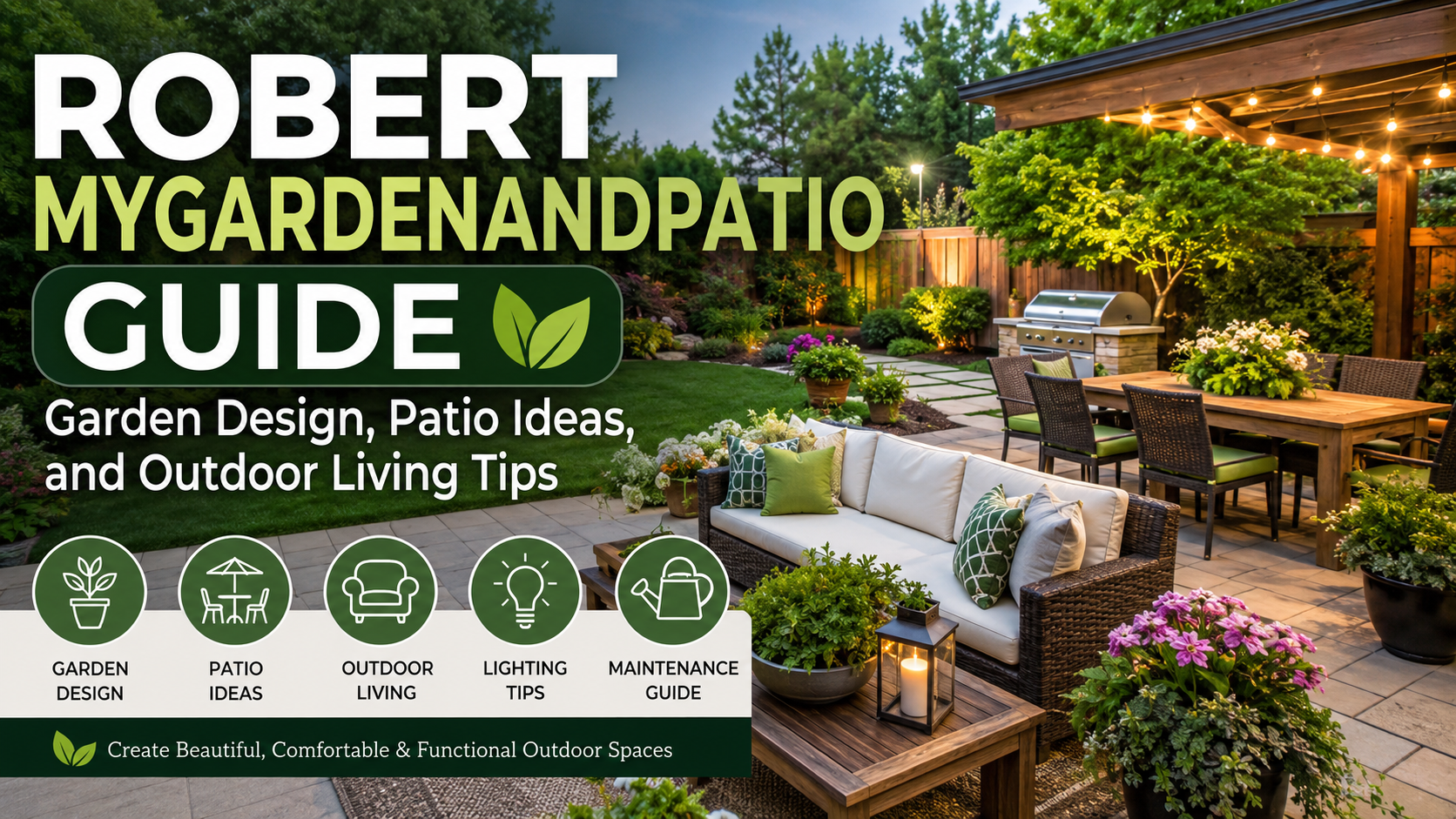
A well-planned outdoor area can become much more than a patch of grass or a place to put a few chairs. With thoughtful choices, a garden or patio can become a comfortable setting for morning coffee, family meals, quiet evenings, weekend gatherings, and everyday relaxation. The robert-mygardenandpatio-guide approach centers on this practical idea: outdoor design should look attractive while also making daily life easier.
Many homeowners begin with furniture or plants. A better starting point is to understand the space itself. Sunlight, drainage, privacy, weather, and maintenance all influence what will work.
This guide brings those considerations together. It explains how to plan a garden and patio, choose suitable plants, create comfortable zones, improve lighting, and avoid common mistakes. The goal is a space that fits your home, routine, and budget.
What Is Robert MyGardenAndPatio?
Robert MyGardenAndPatio can be viewed as an outdoor-living concept centered on practical garden and patio improvement. The robert-mygardenandpatio-guide presents this approach as a way to connect appearance with comfort, function, and long-term usability. Rather than treating an outdoor area as decoration alone, the robert-mygardenandpatio-guide approach connects appearance with comfort, function, and long-term usability.
That distinction matters. A patio may look impressive in photographs but still be difficult to use if there is no shade, poor seating, awkward movement, or inadequate lighting. Similarly, a garden can contain beautiful plants yet become frustrating when everything needs constant attention.
A useful outdoor space begins with a simple question: what do you want to do there?
Your answer should guide the rest of the project. The robert-mygardenandpatio-guide encourages homeowners to consider their actual needs before making major outdoor improvements.
Start by Understanding Your Outdoor Space
Before buying anything, spend time observing the area.
Check where sunlight falls in the morning, afternoon, and evening. Notice which corners stay shaded. After rainfall, look for places where water collects. Also identify existing trees, doors, steps, pathways, walls, fences, and utility areas.
These observations can prevent costly mistakes. The robert-mygardenandpatio-guide also emphasizes understanding existing outdoor conditions before making design decisions.
For example, a sunny patio may be ideal for winter seating but uncomfortable during hot afternoons. A shaded corner may be perfect for a bench but unsuitable for plants that require direct light.
Make a simple sketch of the space and record its approximate measurements. Mark permanent features that cannot easily be moved. Then think about how people currently walk through the area.
Good planning starts with what already exists.
Decide How You Want to Use the Space
An outdoor area should serve real activities rather than simply fill available space.
Think about your normal routine. Do you want somewhere to eat outdoors? Would you prefer a peaceful reading corner? Do children need open space? Perhaps you enjoy gardening, cooking, entertaining friends, or spending evenings outside.
Write down the two or three uses that matter most.
This makes later decisions easier. If outdoor dining is important, the layout should leave enough room for a table and comfortable movement around it. If relaxation is the priority, choose seating that encourages longer stays.
You do not need to create every possible feature. A focused plan often produces a more useful result.
Create Functional Zones
Dividing an outdoor area into zones can make even a large space feel organized and can help a small yard feel more purposeful.
A patio might include a dining zone, a lounge area, and a small cooking station. A garden could have planting beds, a pathway, and a quiet seating corner.
You do not need walls to separate these areas. Furniture placement, changes in surface material, planters, lighting, or groups of plants can create subtle boundaries.
Leave clear routes between important areas. People should not have to squeeze between chairs or walk through planting beds to reach a door.
For a small patio, combine functions where possible. A storage bench can provide seating. A narrow planter can define a boundary without taking much floor space.
Choose Plants for Your Conditions
Plant selection should be based on the environment, not just appearance.
Consider sunlight, soil, drainage, temperature, rainfall, and watering habits. A plant that looks perfect at a nursery may struggle once it reaches a completely different setting.
Start with plants that naturally suit your local conditions. This usually makes care easier and improves the chance of healthy growth.
Pay attention to mature size as well. Small plants can eventually become large shrubs or trees. Give them enough room from the beginning to avoid overcrowding and excessive pruning.
It is also helpful to group plants with similar water and light requirements. This can make irrigation more efficient and simplify routine care.
Build a Balanced Garden Layout
A garden feels more natural when different plant heights and textures work together. Low-growing plants can frame paths, medium-height shrubs can add structure, and taller plants can provide vertical interest or privacy.
Avoid placing every plant at the same height, but do not fill every available space. Open areas help the garden breathe and provide room for movement. Where possible, combine plants with different flowering periods or seasonal foliage.
Make the Patio Comfortable
Comfort should be one of the first priorities when planning a patio.
Choose seating according to how people will actually use it. Dining chairs need a different level of support from lounge chairs. If family members spend long periods outside, comfort becomes more important than simply matching a particular style.
Leave enough space between furniture pieces for easy movement.
Shade also matters. Depending on the property, an umbrella, pergola, shade structure, tree, or other covering can make a major difference during hot weather.
Consider wind and rain too. A seating arrangement that works perfectly on a calm day may be unpleasant in a windy or exposed location.
Select Outdoor Furniture Carefully
Outdoor furniture needs to handle conditions that indoor furniture does not face.
Before buying, consider exposure to sunlight, rain, humidity, dust, and temperature changes. Choose materials that suit the local environment and the amount of maintenance you are willing to provide.
Size matters just as much as material. Measure the available area before purchasing large pieces.
Think about storage as well. Cushions, covers, gardening tools, and seasonal accessories need somewhere to go. A tidy storage solution can prevent the patio from becoming cluttered.
Instead of buying many pieces at once, begin with the furniture needed for your main activity. You can add other items later if the space still needs them.
Use Lighting for Safety and Atmosphere
Outdoor lighting serves two purposes: practical visibility and atmosphere.
Start with areas where people need to see clearly. Steps, entrances, pathways, and changes in level deserve attention.
Then consider softer lighting around seating and dining areas. Lanterns, wall fixtures, string lights, and other suitable options can create a warmer evening setting.
Avoid making the entire garden equally bright. Different levels of illumination can add depth and make selected features stand out.
Lighting should also be positioned so that it does not shine directly into people’s eyes. The goal is comfortable visibility, not maximum brightness.
Add Privacy in a Natural Way
A private outdoor area often feels more comfortable, especially when neighboring properties are close.
You do not always need a tall solid wall. Plants, trellises, screens, climbing greenery, and carefully placed trees can reduce unwanted views while keeping the space open.
First identify where the privacy problem actually comes from. If the view is coming from one upper-floor window, blocking the entire garden may be unnecessary. A targeted solution could solve the problem while preserving light and airflow.
Plants can provide a softer appearance, but remember to consider their mature height and width before planting.
Think About Water and Drainage
Water management is an essential part of garden planning.
Standing water can damage plants, affect surfaces, and create muddy areas. Before installing new beds or patio features, observe how water moves through the property after rain.
Keep drainage paths clear. Avoid directing large amounts of water toward areas that cannot handle it.
Watering should also be planned around plant needs. Plants that require frequent watering should not automatically be mixed with varieties that prefer drier conditions.
Mulch can help retain soil moisture in appropriate garden beds, while efficient irrigation can reduce unnecessary water use.
Keep Maintenance Realistic
One of the most important questions is not what you can create, but what you can maintain.
If you have limited time for gardening, avoid designing a space that depends on constant pruning, watering, or cleaning.
Choose plants suited to your conditions. Group similar care requirements together. Use durable surfaces in busy areas and provide accessible storage for tools.
Maintenance should be part of the original plan rather than an afterthought.
A slightly simpler garden that stays healthy and tidy is often more enjoyable than an elaborate design that quickly becomes neglected.
Plan Your Budget in Stages
You do not have to complete the entire project at once. Start with the changes that solve the biggest problems. If the patio is uncomfortable, improve seating and shade first. If the garden is difficult to navigate, establish pathways. If water collects in one area, address drainage before adding decoration.
Once the essentials work, introduce additional improvements. A staged approach also gives you time to understand what the space really needs.
Common Outdoor Design Mistakes
Several mistakes appear repeatedly in garden and patio projects.
Buying Furniture Before Measuring
Large furniture can overwhelm a small patio. Always check dimensions and allow walking space before purchasing.
Choosing Plants Without Checking Growth
A plant’s current size does not tell you how large it will become. Check mature dimensions and place it accordingly.
Ignoring Sun and Shade
A beautiful seating area may remain unused if it receives intense sunlight all afternoon. Study the light before deciding where people will sit.
Forgetting Storage
Without a place for tools, cushions, toys, and accessories, even a well-designed patio can become cluttered.
Trying to Do Everything at Once
Large projects can become expensive and difficult to manage. Work in stages and prioritize improvements that affect everyday use.
A Simple Step-by-Step Starting Plan
If you are unsure where to begin, use a simple process: inspect the area, identify its problems, decide on the main activities, and divide the space into practical zones.
Next, choose plants according to sunlight, soil, water, and mature size. Measure the patio before selecting furniture. Once the basics work, add shade, lighting, privacy features, and decoration.
Finally, review maintenance and remove anything that demands more care than you can provide. This keeps the project focused and limits unnecessary spending.
Frequently Asked Questions
How can I improve a small patio?
Start by measuring the area and deciding on its main purpose. Choose appropriately sized furniture, keep pathways clear, and use multifunctional pieces when space is limited. The robert-mygardenandpatio-guide approach can help you focus on practical improvements that make a small area more comfortable.
What should I consider before choosing garden plants?
Look at sunlight, soil, drainage, temperature, rainfall, watering requirements, and mature plant size. Choosing varieties suited to your conditions can make long-term care much easier. These considerations are also important when following the robert-mygardenandpatio-guide for a healthier and more manageable garden.
How can I make an outdoor area more comfortable during hot weather?
Shade is usually the first consideration. Depending on your property, an umbrella, pergola, shade structure, or suitable tree can provide relief. Comfortable seating and good airflow also matter. The robert-mygardenandpatio-guide emphasizes planning comfort around the actual conditions of your outdoor space.
How can I add privacy without closing off the garden?
Consider shrubs, trees, trellises, climbing plants, or screens. Focus on the specific sightlines that create the privacy problem instead of blocking the entire space. This practical approach also fits the principles of the robert-mygardenandpatio-guide.
Should I complete my entire garden project at once?
Not necessarily. A staged approach can be easier to manage. Begin with practical improvements such as layout, drainage, seating, or shade, then add decorative features later.
Final Thoughts
The strongest outdoor spaces are not necessarily the most expensive or elaborate. They are the ones that respond well to the people who use them.
The robert-mygardenandpatio-guide perspective emphasizes thoughtful planning, suitable plants, comfortable furniture, practical lighting, privacy, sensible maintenance, and long-term flexibility. These elements work together to turn an ordinary outdoor area into a useful extension of the home.
Start by observing the space. Decide what you want to do there. Plan the layout before buying products, choose plants according to real conditions, and improve the area in manageable stages.
Most importantly, let function guide appearance. When a garden or patio is comfortable, practical, easy to maintain, and suited to your lifestyle, its beauty becomes much more meaningful.